

If you are dealing with a stubborn drain clog, you have probably heard two common solutions mentioned: snaking and hydro jetting. But the big question most homeowners ask is this: is hydro jetting better than snaking?
The short answer is it depends on the type of clog and the condition of your pipes. Both methods work, but they solve problems in different ways. Understanding the difference can help you make a smarter decision for your home.
Let’s break it down.
What Is Drain Snaking?
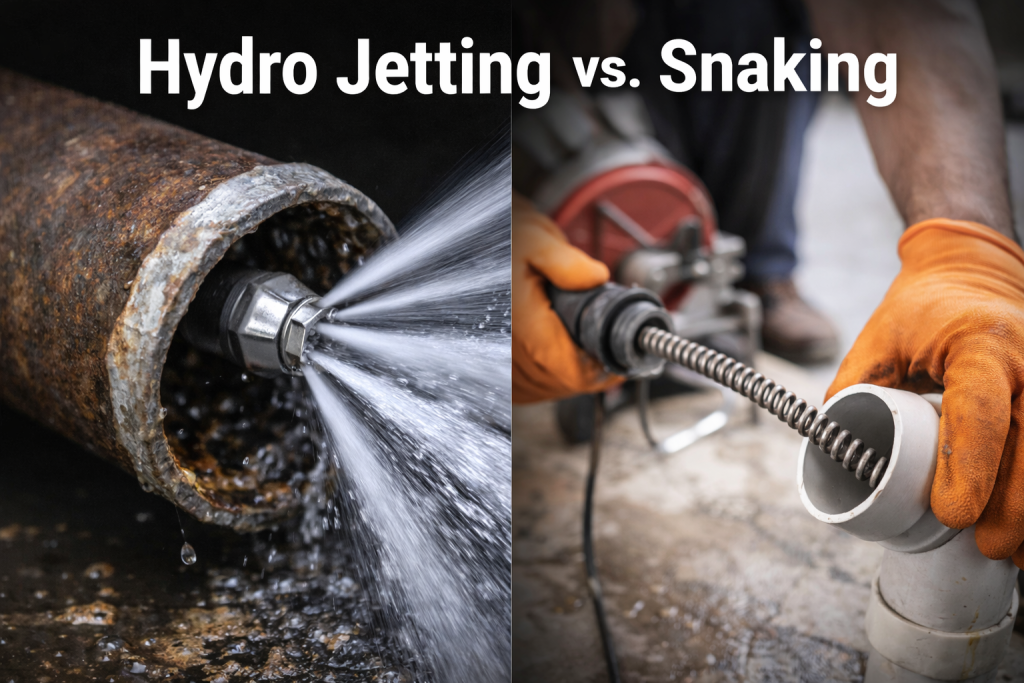
Drain snaking, also called augering, uses a long flexible metal cable with a cutting or corkscrew tip. The plumber feeds the cable into the pipe and manually or mechanically rotates it to break apart or pull out the blockage.
Snaking is typically used for:
- Hair clogs
- Small grease buildups
- Toilet blockages
- Minor obstructions close to the drain opening
It is a targeted solution. The snake punches a hole through the clog so water can flow again.
For quick, localized issues, snaking is often effective and affordable.
What Is Hydro Jetting?
Hydro jetting uses high pressure water, sometimes up to 4,000 PSI, to blast debris and buildup from the inside of your pipes. Instead of simply poking a hole through the clog, it scours the pipe walls clean.
Hydro jetting is commonly used for:
- Heavy grease buildup
- Sludge and scale
- Tree root intrusion
- Recurring clogs
- Commercial kitchen drains
Because it cleans the entire pipe interior, many homeowners wonder: is hydro jetting better than snaking for long term results?
Is Hydro Jetting Better Than Snaking for Tough Clogs?
When dealing with severe or recurring blockages, hydro jetting often has the advantage.
Snaking removes the immediate obstruction, but it may leave residue behind. Over time, that leftover buildup can cause another clog.
Hydro jetting, on the other hand, flushes out grease, soap scum, mineral deposits, and debris along the full pipe diameter. That means a more thorough cleaning.
However, hydro jetting may not be necessary for simple clogs. If a child flushed too much toilet paper or you have a small hair blockage, snaking can solve the issue quickly and at a lower cost.
Pipe Condition Matters
One important factor when asking is hydro jetting better than snaking is the age and condition of your plumbing.
Hydro jetting uses significant water pressure. If your pipes are old, corroded, or damaged, that pressure could potentially cause leaks or worsen existing weaknesses.
Professional plumbers often inspect the pipes with a camera before recommending hydro jetting. This ensures the pipes can handle the pressure safely.
Snaking is generally gentler and may be more appropriate for older systems.
Cost Differences
Cost can also influence the decision.
Snaking is typically less expensive because it requires less equipment and time. It is often used as a first step for simple clogs.
Hydro jetting usually costs more due to specialized equipment and the thorough cleaning process. However, if it prevents repeated service calls, it may save money in the long run.
When asking is hydro jetting better than snaking, think about whether you want a temporary fix or a deeper cleaning solution.
When to Choose Snaking
Snaking is usually the better option when:
- The clog is small and localized
- It is your first blockage
- You want a quick, affordable fix
- The pipes are older and fragile
It clears the obstruction efficiently without introducing high pressure.
When to Choose Hydro Jetting
Hydro jetting may be the better choice when:
- You experience frequent clogs
- Grease buildup is heavy
- You suspect tree roots
- You want a thorough pipe cleaning
For long term performance, hydro jetting often delivers more complete results.
Final Thoughts
So, is hydro jetting better than snaking? In many cases, hydro jetting provides a deeper, more comprehensive cleaning. But snaking remains an effective and budget friendly solution for minor or isolated clogs.
The best approach depends on the severity of the blockage, the condition of your pipes, and your long term goals. A professional inspection can help determine which method makes the most sense for your home.
When handled correctly, both options can restore proper drainage. The key is choosing the right solution for your specific situation.