


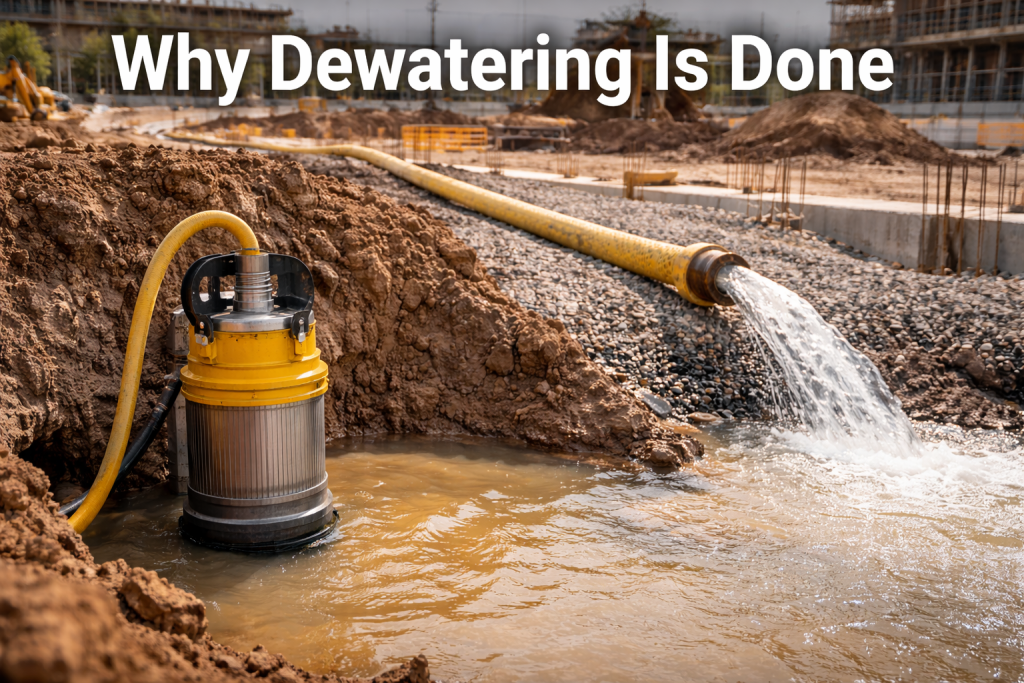
If you have ever walked past a construction site and seen large hoses pumping water out of the ground, you might have wondered what is going on. It is not just about removing puddles. There is a critical reason behind it.
Many people ask, why dewatering is done during construction projects? The answer is simple. Water can seriously interfere with building foundations, underground utilities, and overall site stability.
Let’s take a closer look at why dewatering matters and how it helps keep projects safe and on schedule.
What Is Dewatering?
Dewatering is the process of removing groundwater or surface water from a construction site. This is often done before or during excavation to create dry, stable working conditions.
Water can accumulate for several reasons:
- High water table
- Heavy rainfall
- Nearby rivers or lakes
- Natural underground water flow
Without proper removal, water can make soil unstable and unsafe for workers and equipment.
Understanding why dewatering is done starts with understanding how water affects soil.
Why Dewatering Is Done Before Foundation Work
One of the biggest reasons why dewatering is done is to protect the integrity of a building’s foundation.
When soil becomes saturated, it loses strength. According to geotechnical engineering principles, water reduces the load bearing capacity of soil. That means the ground cannot properly support the weight of structures.
If construction continues without removing excess water, it can lead to:
- Foundation shifting
- Uneven settling
- Structural cracks
- Long term stability issues
By lowering the groundwater level, contractors create a firm base for pouring concrete and installing footings.
Improving Worker Safety
Safety is another major reason why dewatering is done.
Wet, muddy conditions can cause equipment to slip and create hazardous working environments. Excavation walls are also at higher risk of collapsing when soil is saturated.
Dewatering helps:
- Stabilize excavation walls
- Reduce the risk of cave ins
- Provide safer footing for workers
- Protect machinery from damage
On large projects, maintaining safe site conditions is a top priority. Removing excess water is a key part of that process.
Protecting Underground Utilities
Construction projects often involve installing pipes, sewer systems, or electrical conduits below ground. Water can interfere with accurate placement and sealing of these systems.
When asking why dewatering is done, another important answer is to ensure proper installation of underground infrastructure.
Dry conditions allow for:
- Proper pipe alignment
- Secure joint connections
- Better compaction of backfill soil
- Reduced risk of future leaks
Waterlogged soil can shift after installation, causing long term maintenance problems.
Common Dewatering Methods
There are several methods used depending on site conditions.
Sump Pumping
This is one of the simplest techniques. Water collects in a pit and is pumped out.
Wellpoint Systems
Small wells are installed around the excavation area to lower the groundwater table.
Deep Wells
Used for larger or deeper excavations, these systems remove water from greater depths.
Each method is selected based on soil type, depth, and project size.
Understanding why dewatering is done also involves understanding that it is not a one size fits all process. The approach varies depending on site conditions.
Environmental Considerations
Dewatering must be done responsibly. Water removed from a site often needs to be filtered or treated before discharge to prevent contamination of nearby waterways.
Regulations may require permits to ensure environmental protection. Proper management ensures that construction does not negatively impact surrounding ecosystems.
Is Dewatering Always Necessary?
Not every project requires dewatering. In dry climates or areas with low water tables, it may not be needed.
However, in regions with high groundwater levels or frequent rainfall, dewatering becomes essential. Skipping this step can lead to costly delays and repairs.
Before beginning excavation, engineers typically assess soil and groundwater conditions to determine whether dewatering is required.
Final Thoughts
So, why dewatering is done? It protects foundations, improves worker safety, stabilizes soil, and ensures proper installation of underground systems. Without it, construction projects could face serious structural and safety risks.
While it may seem like a simple process of pumping water away, dewatering plays a vital role in the success and durability of buildings and infrastructure.
If you see hoses running at a construction site, now you know. It is not just about removing water. It is about creating a safe and stable environment for building something that will last.