


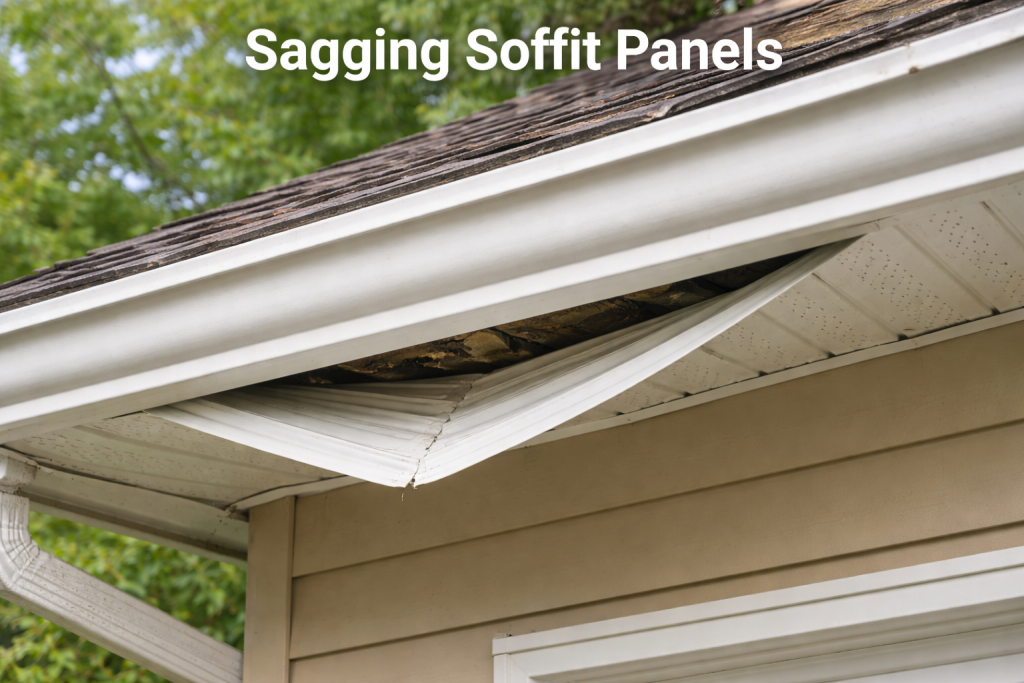
If you have noticed sections of your roofline starting to droop or pull away, you may be dealing with sagging soffit panels. While they might seem like a minor cosmetic issue at first, sagging soffits can signal underlying problems that should not be ignored.
Soffits play an important role in protecting your home and maintaining proper ventilation. When they begin to sag, it is often a sign that something needs attention. Let’s break down what causes this issue and what you can do about it.
What Are Soffit Panels?
Soffit panels are the horizontal boards located underneath the overhang of your roof. They connect the edge of the roof to the exterior wall of your home.
Soffits serve several important purposes:
- Protect rafters from moisture
- Improve attic ventilation
- Keep pests out
- Enhance the appearance of your roofline
When soffits are properly installed and maintained, they help regulate airflow and prevent moisture buildup in the attic.
What Causes Sagging Soffit Panels?
There are several common reasons homeowners experience sagging soffit panels.
- Moisture Damage
Water infiltration is one of the leading causes. If gutters are clogged or roof flashing fails, moisture can seep into soffit materials, causing them to weaken and sag. - Poor Installation
Improper fastening or inadequate support can cause soffits to loosen over time. - Aging Materials
Wood and even some vinyl soffits can deteriorate with age, especially in areas exposed to extreme weather. - Pest Activity
Birds, squirrels, or insects may damage soffit panels while trying to enter the attic. - Heavy Debris
Leaves and debris trapped in gutters can add weight and strain the soffit structure.
Identifying the root cause is essential before making repairs.
Why You Should Not Ignore Sagging Soffit Panels
It might be tempting to overlook minor sagging, but doing so can lead to bigger problems.
Sagging soffit panels can:
- Allow moisture into the attic
- Reduce ventilation efficiency
- Attract pests
- Lead to wood rot
- Damage fascia boards
Poor attic ventilation can also increase energy costs. According to the U.S. Department of Energy, proper attic airflow helps regulate temperature and prevents excess moisture buildup.
Addressing the issue early can prevent more expensive repairs later.
How to Fix Sagging Soffit Panels
The repair method depends on the severity of the problem.
- Tighten or Replace Fasteners
If panels have simply come loose, securing them properly may solve the issue. - Replace Damaged Sections
If moisture or rot has weakened the material, replacing the affected panels is often the best solution. - Improve Drainage
Check gutters and downspouts to ensure water is flowing away from the roofline. - Seal Gaps
Closing entry points prevents pest damage and further deterioration. - Upgrade Materials
In some cases, switching to more durable materials like aluminum or high quality vinyl may provide longer lasting protection.
Professional inspection is recommended if structural damage or widespread moisture issues are suspected.
Preventing Future Soffit Problems
Prevention goes a long way in protecting your roofline.
To reduce the risk of sagging soffit panels:
- Clean gutters regularly
- Inspect roof flashing annually
- Check for signs of pest intrusion
- Ensure proper attic ventilation
- Repair minor issues promptly
Routine maintenance helps extend the life of your soffits and other exterior components.
When to Call a Professional
If sagging is widespread or accompanied by water stains, mold, or structural damage, it is best to contact a roofing or exterior specialist.
Professionals can assess whether:
- Fascia boards are damaged
- Roof leaks are present
- Ventilation needs improvement
- Structural support is compromised
Addressing sagging soffit panels quickly protects both your roof and your home’s interior.
Final Thoughts
Sagging soffit panels may start as a small cosmetic concern, but they can signal deeper issues related to moisture, ventilation, or structural integrity. By identifying the cause and making timely repairs, you can prevent further damage and maintain your home’s exterior.
Regular inspections and proper maintenance go a long way in keeping your soffits secure and functional. If you notice signs of sagging, do not wait. A quick fix today can save you from costly repairs tomorrow.