


If you rarely think about your roofline, you are not alone. Most homeowners focus on shingles and gutters, but soffit and fascia play an equally important role in protecting your home.
The problem is, damage to these areas often goes unnoticed until it becomes serious. That is why understanding the signs you need soffit and fascia repair can save you from costly repairs later.
Let’s break it down.
What Are Soffit and Fascia
Before spotting problems, it helps to know what these parts do.
The soffit is the underside of your roof overhang. It helps with ventilation and keeps moisture from building up.
The fascia is the board that runs along the edge of your roof. It supports the gutters and acts as a barrier against weather damage.
Together, they protect your roof and improve airflow in your attic.
Why Soffit and Fascia Matter
These components might seem minor, but they play a big role in your home’s structure.
Proper ventilation from the soffit helps prevent mold and moisture buildup.
The fascia keeps water from entering your roof and supports your gutter system.
When either of these fails, it can lead to bigger problems like roof damage or structural issues.
Common Signs You Need Soffit and Fascia Repair
Damage usually shows clear warning signs if you know where to look.
Here are the most common indicators.
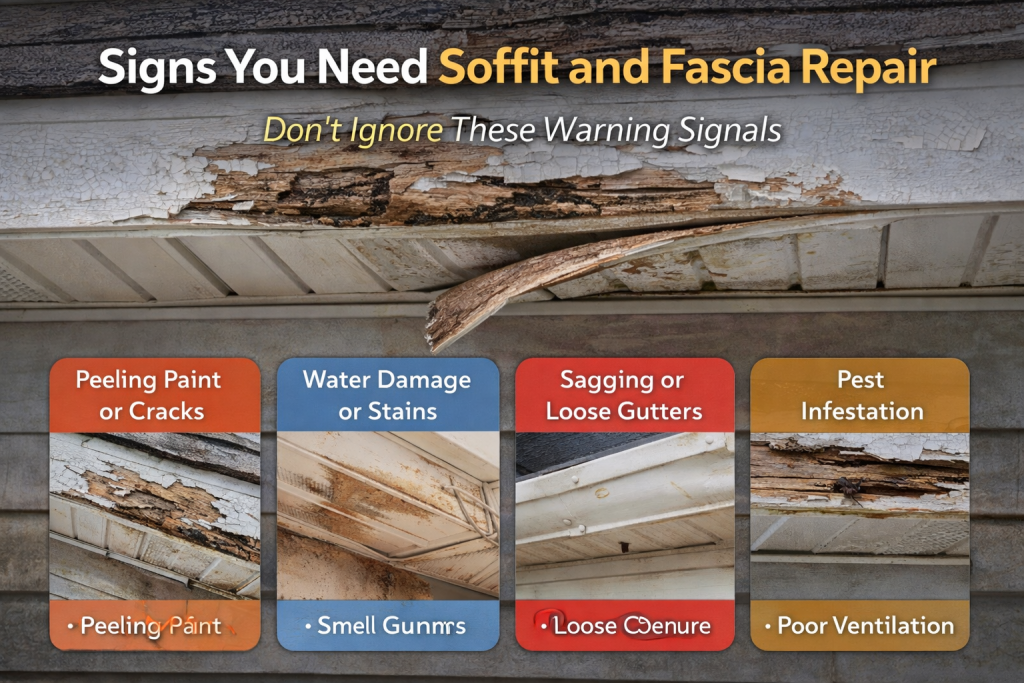
Peeling Paint or Visible Cracks
If the paint on your fascia is peeling or you notice cracks, it could mean moisture is getting in.
This is often one of the first signs you need soffit and fascia repair.
Water Damage or Stains
Water marks, discoloration, or soft spots indicate that moisture has already affected the material.
This can weaken the structure over time.
Sagging or Loose Gutters
Since gutters are attached to the fascia, any damage to it can cause gutters to pull away or sag.
This is a clear sign that repair is needed.
Pest Infestation
Damaged soffits can create openings for pests like birds, squirrels, or insects.
If you hear noises in your roof area, it may be linked to soffit damage.
Poor Ventilation in the Attic
If your attic feels too hot or humid, it could be due to blocked or damaged soffit vents.
Proper airflow is essential for maintaining your roof’s condition.
Rotting Wood
Wooden fascia boards are especially vulnerable to rot if exposed to moisture.
If you notice soft or crumbling areas, immediate repair is necessary.
What Causes This Damage
Understanding the cause helps prevent future issues.
Common causes include:
• Prolonged exposure to rain and moisture
• Clogged gutters causing water overflow
• Poor installation or aging materials
• Lack of regular maintenance
Over time, these factors can weaken both soffit and fascia.
Why You Should Not Ignore the Problem
Delaying repairs can lead to bigger issues.
According to home maintenance experts, small roofline problems can quickly turn into expensive structural damage if left untreated.
Ignoring the signs you need soffit and fascia repair can result in:
• Roof leaks
• Mold growth
• Increased repair costs
• Reduced home value
Taking action early is always the smarter choice.
Simple Maintenance Tips
You can extend the life of your soffit and fascia with regular care.
• Clean your gutters regularly
• Inspect your roofline every few months
• Fix minor damage quickly
• Ensure proper ventilation
These small steps can prevent major repairs later.
When to Call a Professional
Some issues are easy to spot but harder to fix.
You should call a professional if:
• There is visible rot or structural damage
• Gutters are pulling away from the roof
• You notice persistent moisture issues
• Pests have entered through the roofline
Experts can assess the damage and provide long-term solutions.
Final Thoughts
Your roofline does more than you think. Soffit and fascia quietly protect your home from moisture, pests, and structural damage.
By recognizing the signs you need soffit and fascia repair, you can take action early and avoid costly problems.
A quick inspection today can save you a major repair tomorrow.