


If your attic feels too hot, humid, or poorly ventilated, the problem might not be your roof, it could be your soffit vents. These small openings play a big role in keeping your home healthy and energy efficient.
Understanding soffit vent repair can help you improve airflow, prevent moisture buildup, and protect your roof structure.
Let’s break it down.
What Are Soffit Vents and Why They Matter
Soffit vents are located under the roof overhang. Their main job is to allow fresh air to enter the attic and keep air circulating.
Proper ventilation helps:
• Prevent moisture buildup
• Reduce the risk of mold growth
• Keep attic temperatures balanced
• Extend the life of your roof
Without functioning vents, your entire roofing system can suffer over time.
Signs You Need Soffit Vent Repair
Problems with soffit vents often go unnoticed until they cause bigger issues.
Here are common warning signs:
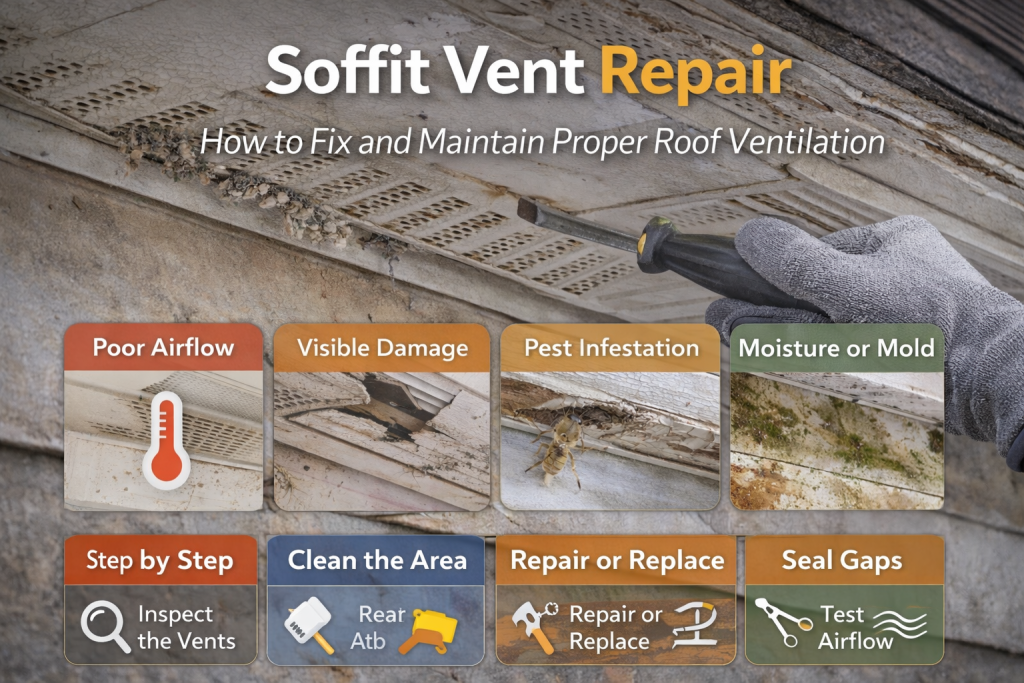
Poor Airflow in the Attic
If your attic feels hot and stuffy, your vents may be blocked or damaged.
Visible Damage or Cracks
Cracked, broken, or missing vents are clear signs that repair is needed.
Pest Activity
Open or damaged vents can allow birds, insects, or rodents to enter your attic.
Moisture or Mold
Excess humidity or mold growth often indicates poor ventilation.
These are strong indicators that soffit vent repair should not be delayed.
Common Causes of Soffit Vent Damage
Understanding the cause helps you fix the problem properly.
• Dust and debris blocking airflow
• Paint or insulation covering vents
• Weather damage over time
• Pest intrusion
• Poor installation
Any of these issues can reduce ventilation efficiency.
Step by Step Soffit Vent Repair
For minor issues, you can handle repairs yourself.
Here is a simple process:
Inspect the Vents
Check for blockages, cracks, or visible damage.
Clean the Area
Remove dirt, debris, or insulation blocking airflow.
Repair or Replace Vents
Fix small cracks or replace damaged vent covers if needed.
Seal Gaps
Ensure there are no openings that pests can enter through.
Test Airflow
Make sure air is flowing properly after the repair.
Tools You May Need
• Screwdriver or drill
• Replacement vent covers
• Cleaning brush
• Sealant or caulk
These basic tools are usually enough for small repairs.
Common Mistakes to Avoid
Avoid these mistakes when handling soffit vent repair:
• Blocking vents with insulation
• Using the wrong vent size
• Ignoring small cracks
• Skipping regular inspections
Proper care ensures long-term performance.
How to Prevent Future Problems
Keeping your soffit vents in good condition is simple with regular maintenance.
• Inspect vents every few months
• Keep them clean and free of debris
• Ensure proper installation
• Check for pest activity
These steps help maintain proper airflow and prevent damage.
When to Call a Professional
Some issues require expert help.
You should consider a professional if:
• There is widespread damage
• Ventilation problems persist
• Structural repairs are needed
• You are unsure about installation
Professionals can ensure everything is properly repaired and optimized.
Final Thoughts
Soffit vents may be small, but they play a big role in protecting your home. Proper airflow keeps your attic dry, your roof strong, and your home energy efficient.
By understanding soffit vent repair, you can address problems early and avoid costly damage.
A quick check today can make a big difference in your home’s long-term health.